
Service
Custom Applications
Some systems combine constraints that do not sit neatly inside one service lens. Custom applications cover those cases by combining the required capabilities into one coherent system shaped around the situation instead of a predefined category.
Operational fit
Where This Service Is The Right Fit
Use this to judge whether the problem is mainly structure, control, and workflow enforcement rather than feature volume.
This Is A Fit If
- Businesses with unique or complex requirements.
- New product or platform ideas.
- Systems combining multiple domains.
Typical Failures
- Limitations of predefined system types.
- Approval, access or workflow rules generic tools cannot enforce.
- Need for full control over system behavior and state.
Deliverables
What You Get
The service is structured around operational reliability, not feature volume.
Benefits
- Complete alignment with business needs.
- No limitations from generic tools.
- Flexible and scalable architecture.
- Ability to evolve over time.
Deliverables
- A fully custom-built system aligned with your requirements.
Delivery Process
How The Work Moves
The work is staged so the system logic, scope, and delivery checkpoints stay readable as the build progresses.
Step 01
Define system scope and constraints.
Step 02
Design architecture around requirements.
Step 03
Build and validate core functionality.
Step 04
Iterate and expand as needed.
Start The Conversation
Start With The Product You Need To Build
Describe how the operation works, what has to stay aligned, and what the system needs to handle. That is enough to start the conversation.
Related Example
A System In The Same Operating Range
Related example
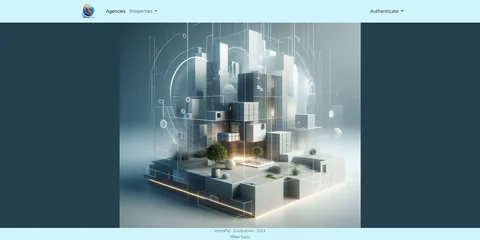
ImmoPal: Scheduling, Auction & Communication State System
For real estate operations where appointments, auctions and communication must remain synchronized in real time, this system combines those workflows into one operational platform. It is built for businesses that would otherwise coordinate property activity, agent availability, bids and customer communication across disconnected tools.
Do you need something that doesn’t fit any standard category?
FAQ
Frequently Asked Questions
The questions below cover fit, scope boundaries, and what this service is meant to control operationally.
How do you approach something that has no predefined structure?
We define system boundaries, workflows and constraints first, then design architecture around them. The system emerges from requirements, not assumptions.
How do you avoid overbuilding?
By delivering in controlled iterations. The system starts with core functionality and expands based on real usage and validated needs.
What makes custom software worth the investment?
It removes limitations, reduces operational friction and gives full control over how the system behaves, which is not possible with generic tools.
What is the biggest risk in custom development?
Misalignment with actual business needs. This is mitigated by defining workflows and constraints before implementation.